U.S. Constitution

Two Epic Revolutions—One a Struggle for Liberty, and the Other for Savagery by Regina Kirkland

Contrasting Ideals and Ends in the American and French Revolutions by Miguel A. Faria, Jr., M.D. is a comprehensive analysis and comparison of the American and French Revolutions—two revolutions that changed the world. Both revolutions were influenced by the Enlightenment and the Age of Reason. However, each revolution took very divergent paths with diametrically opposite outcomes. […]

Two Epic Revolutions—One a Struggle for Liberty, and the Other for Savagery by Regina Kirkland Read More »

The Glory and Legacy of the Ancient Roman Republic by Miguel A. Faria, MD

The ancient Romans expanded their power and influence by treaties, alliances, and wars, eventually controlling the Italian peninsula, assimilating the neighboring Etruscan culture to the northeast and the Greek culture in the southern part of the peninsula. From Italy, the Roman power extended over the littoral Mediterranean, gradually incorporating a large part of Europe, Asia

The Glory and Legacy of the Ancient Roman Republic by Miguel A. Faria, MD Read More »

No State Religion But With Free Exercise Thereof by Miguel A. Faria, MD

The American Founders were familiar with the historic situation in Scotland during the Reformation and before the Act of Union with Great Britain. The Presbyterian Church led by John Knox (1514–1572) had ruled as a virtual theocracy, enforced conformity throughout the land, persecuted Catholics, burned heretics, and had even manipulated the effective deposition of Mary

No State Religion But With Free Exercise Thereof by Miguel A. Faria, MD Read More »

Separation of Church and State — Worshipping at the Altar of Secular Civic Religion? by Miguel A. Faria, MD

Note: The article below written years ago served as a springboard for Dr. Faria’s “Chapter 12 Separation of Church and State—Worshipping at the New Altar of Civic Religion?” in Contrasting Ideals and Ends in the American and French Revolutions published in December 2024 by Cambridge Scholars Publishing, Newcastle upon Tyne, UK. The article was fully

Separation of Church and State — Worshipping at the Altar of Secular Civic Religion? by Miguel A. Faria, MD Read More »
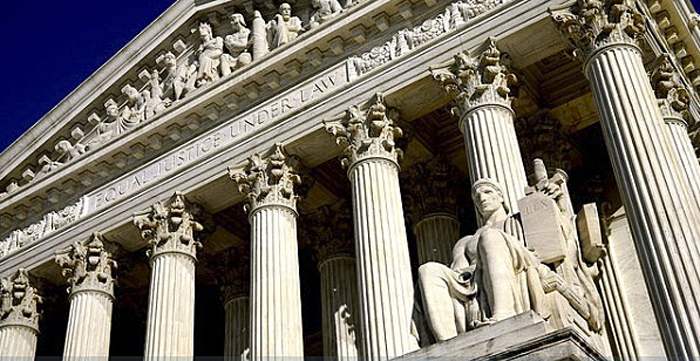
Let’s Keep the Electoral College (Part 1) by Miguel A. Faria, MD

The American Founding Fathers established a Constitutional Republic with a federal system of government—that is, a national government vis-à-vis state governments. As noted in previous chapters, this federal system incorporated a series of checks and balances with separation of powers and both direct and indirect legislative representation. Within the conceptual framework, an Electoral College was

Let’s Keep the Electoral College (Part 1) by Miguel A. Faria, MD Read More »

A Constitutional Republic, Not a Social Democracy, ‘If We Can Keep It’ by Miguel A. Faria, MD

On September 18, 1787, the last day of the Constitutional Convention in Philadelphia, Pennsylvania, after the Founding Fathers concluded the drafting of the U.S. Constitution at Independence Hall, Mrs. Elizabeth Willing Powel asked Dr. Benjamin Franklin a pertinent question: “Well doctor,” she began, “what have we got—a republic or a monarchy?” Franklin answered, “A republic,

A Constitutional Republic, Not a Social Democracy, ‘If We Can Keep It’ by Miguel A. Faria, MD Read More »

Scroll to Top